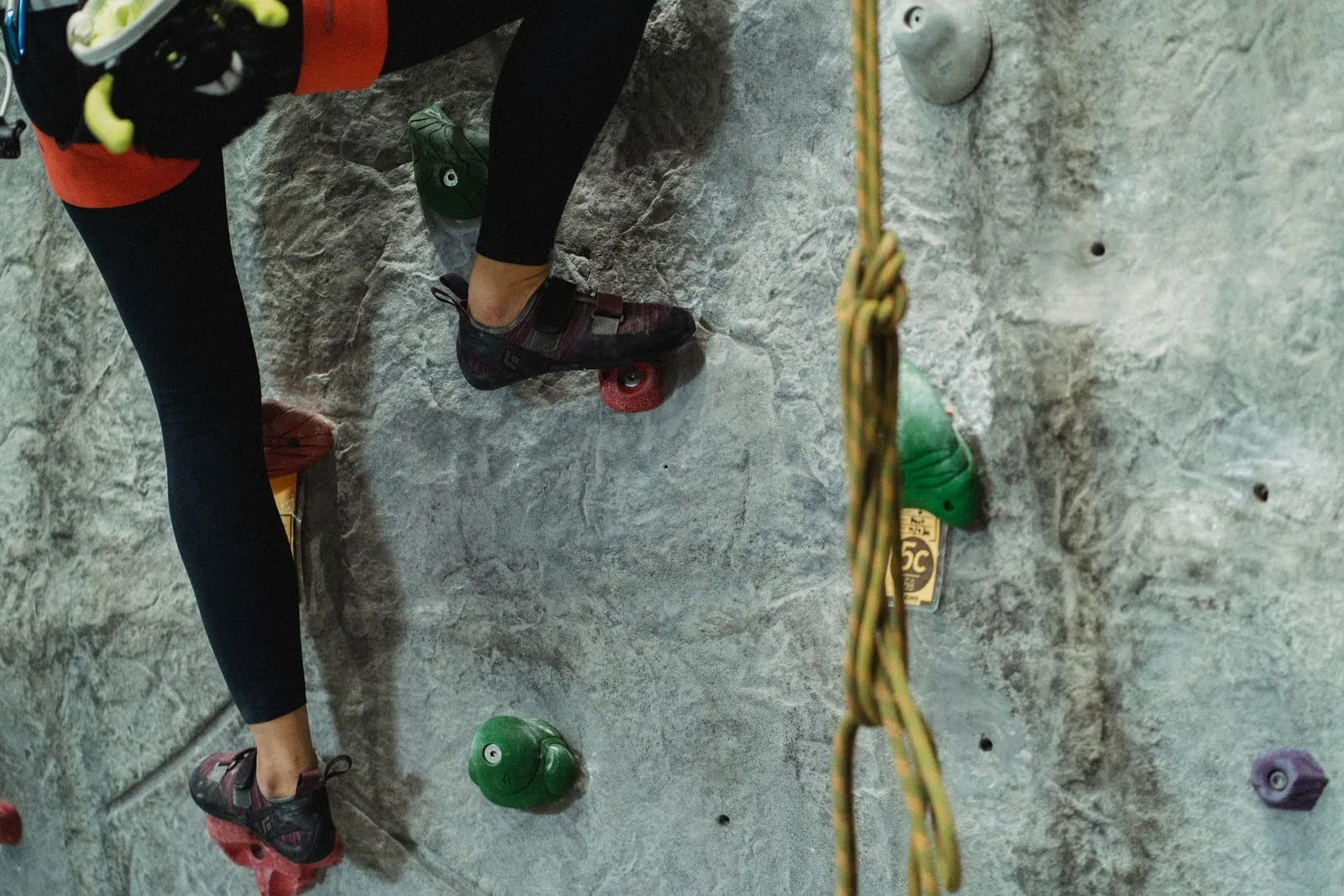
Your first climbing shoes do not need to be painful, highly specialized, or expensive. They should fit securely, feel comfortable enough to climb in, and suit the kind of climbing you plan to do. If you are new to the sport, renting is a practical way to learn what works before buying. Use these simple checks to compare fit, make sense of comfort, and decide when it is time to own a pair.
Start With a Secure Fit
Climbing shoes should fit closer than everyday sneakers, but they should not cause sharp pain or numbness. Your toes may touch the front of the shoe, and the fit should feel snug across the foot without your heel lifting when you stand on your toes. Try both shoes and check for pressure points before deciding.
Sizing varies by brand and shoe model, so do not rely on your usual street-shoe size. Ask gym staff or a knowledgeable shoe fitter to help you compare options. Try shoes late in a session only if your feet are not already swollen; otherwise, shop when your feet feel rested so the fit is easier to judge.
Comfort Matters for Beginners
A beginner-friendly shoe usually has a flatter shape and moderate stiffness. This provides a stable platform for learning foot placement without forcing your toes into an aggressive position. A simple lace-up or hook-and-loop closure can both work; choose the style that feels secure and is easy for you to put on and take off.
Give each pair a few minutes on your feet. Stand, bend your knees, and press your toes against a wall or low climbing surface if the shop allows it. Mild snugness is normal, but a shoe that makes you want to remove it immediately is unlikely to help you enjoy a full session.
Try Rentals Before Buying
Renting is a sensible choice for your first visits. It lets you focus on basic movement and learn how often you climb before spending money on gear. Rental shoes may feel less precise than a well-fitted personal pair, but they are usually adequate for trying introductory routes and getting familiar with the sport.
Check rental shoes for a secure fit and ask staff to exchange them if they feel loose, painfully tight, or damaged. Wear clean, dry socks if the gym permits or requires them, and follow the gym’s hygiene guidance. Notice what you like or dislike after climbing: toe pressure, heel movement, closure style, and how quickly you want to take the shoes off.
Know When to Buy Your Own
Consider buying when you are climbing regularly, want a consistent fit, or find that rental shoes are limiting your comfort and confidence. You do not need an advanced model to begin. A comfortable all-around shoe is often a better first purchase than a highly curved shoe designed for specialized climbing.
Set a practical budget, try several models, and prioritize fit over appearance or claims about performance. Follow the manufacturer’s care instructions, let shoes air out between sessions, and avoid leaving them in a hot car. If you are unsure, keep renting while you learn what your feet need; there is no need to rush into a purchase.
The right first shoe feels secure without creating distracting pain, and renting can help you discover that fit before you buy. Choose a comfortable, versatile pair when your climbing routine makes ownership worthwhile. Ask Northline Climbing staff for fitting guidance or rental details before your next session.